
The Ultimate Guide to Choosing and Caring for A Real Christmas Tree
This post may contain affiliate links. Please read our Disclosure Policy.
There is nothing quite like the smell of a real Christmas tree filling your home during the holidays. I grew up on a Christmas tree farm, so I’ve had my fair share of experience with picking and caring for the best trees. Every year, I keep up the tradition of heading to a Christmas tree farm the first weekend in December to find that perfect, classic Christmas tree. It stays up until just after New Year’s when it’s time to pack away the holiday decor. In this guide, I’ll share my tried-and-true tips for decorating and caring for your real tree—everything from choosing the best tree to keeping it fresh and festive all season long!
This post may contain affiliate links. For more information, please see our disclosure policy.

Choosing The Perfect Tree
Before leaving home for a Christmas tree, it’s important to assess your space to get a realistic idea of the height and width available to set it up. Decide if your tree will be positioned against a wall or in a corner. Since natural trees aren’t perfect, this will help you determine whether you need one with three good sides or if you can settle for one with a single ideal angle.
When visiting your local lot or a Christmas tree farm, many pre-cut trees will be organized by height or provide poles to measure fresh-cut options before harvesting (see photo below).
When picking a Christmas tree, be sure the base isn’t too full of branches so there’s room for presents underneath. Often, the top of the tree has a long tip, but you can cut it back to help your topper sit more securely and look better in the tree.
Finding the freshest tree ensures it will last throughout the holiday season. Run your hand down the length of the tree to feel if they are strong branches (will they hold the weight of the ornaments without drooping too much), and have good needle retention (is there already a lot of needles falling off) the healthiest tree will have deep green soft needles and excellent needle retention.

Proper Tree Care Before And After Bringing It Home
Some farms offer tree baling, which is super helpful for larger trees. The tree gets pulled through a cone-shaped device that wraps it in netting or bailer twine. This process shrinks your tree down without harming the branches. That way, it’s easier to load and transport your tree home and through the door into the house. If you don’t plan to set your tree up inside right away, keep it outdoors in the cold, which will keep it fresher longer.
Trimming The Base
I recommend double-checking the height of your tree before you leave the lot. The lot owner usually has a chainsaw handy to trim the base for you before they bale it. You might think you’ve got the tools at home to do it yourself but trust me—there’s so much sap in that stump, it’ll turn into a sticky mess fast. If you do have to cut at home and don’t own a chainsaw, I’ve had luck with a reciprocating saw, especially if it is just to trim a branch. If any of the branches need to be removed, ask if you can take the greenery home. You can use it for other decorations like making a natural wreath, a festive swag or a garland.

If you’re getting your tree from a pre-cut lot, there is a good chance it has been cut for days or weeks. If a tree has been cut for more than six to eight hours, you’ll need to slice about 1/2 inch off the bottom before putting it in the stand and adding water. The exposed part dries out once the tree is cut and can’t soak up water properly. By making a fresh cut, you’ll reopen those cells, and the tree will be able to drink again.
Christmas Tree Stand Recommendations
Setting up your tree can be tricky, especially with all the different types of trees stand out there. But picking the right one can make a world of difference. Stands come in all sorts of materials—metal, plastic, a mix of both, or even concrete. Some have long legs for extra stability, while others have short or no legs at all. You’ll also find stands with big water containers and some with small ones. So, how do you choose the best one for your tree? Here’s what to look for:
- Stability- it needs to keep the tree upright
- Adequate water capacity- about one litre/quart for each inch of stem diameter
- Easy set-up – Thumb screws are common, but some newer versions have a foot pedal
This isn’t the place to be cheap—a good tree stand will last you a lifetime. Go for one made with simple, premium-quality materials, and you won’t regret it!
THE STAND I HAVE
REMOVABLE LEGS
CAST IRON STAND
MODERN STAND

Putting The Tree In A Stand
Putting a tree in a stand is best done by a two-person team. I suggest keeping the baling twine on while setting the tree up outside the house. This helps minimize the mess since some needles will fall off during this process.
TIP: Wear gardening gloves while getting the tree up to avoid sticky sap fingers.
Depending on the type of stand you have, you might need to lay the tree down on its side and position the stand at the base of the tree. Then, you can stand the tree up to straighten it. While one person holds the tree straight, the other can tighten the thumb screws on the stand to secure the tree in an upright position. This process may vary depending on the design of your tree stand, so always refer to the specific instructions provided with your stand for the best results.

Temperature And Placement
When setting up the tree, ensure it’s placed away from direct heat sources like floor vents, wood stoves, or fireplaces. Lowering the room temperature can help extend the tree’s lifespan, as heat can dry out the tree faster than usual. Although vintage light sets have an added charm, LED lights with low heat will benefit the tree greatly.
Before setting up the tree, I like to lay a plastic tablecloth on the hardwood floor. It helps catch any unnoticed water spills and collects some of the fallen needles, especially when it’s time to take the tree down. The tablecloth also makes repositioning the tree easier, as it glides smoothly without scratching the floor or digging into a rug.

Watering And Maintaining Freshness
It might seem obvious, but keeping your real Christmas tree well-watered is very important. A freshly cut tree can take up a whole bucket of water on the first day and will need a daily drink for the first week. Set a reminder on your phone to check the water level at the same time each day. I like to use a pop bottle to pour water into the stand, as its small opening prevents any spills and the bendable plastic can flex if bumping a branch when you turn it upright. Check the water level daily and keep it topped up to keep your tree’s dark green needles looking lush all season long!

Using Additives In The Water
My 6th-grade self is thrilled to share the results of my science fair project! After some serious research, I found that the most popular choice of water additive for Christmas trees is white sugar! I tested it against soda, brown sugar, and store-bought additives, and adding just 2 cups of sugar to the first watering can help your real Christmas tree keep its needles longer. Just mix the sugar in warm water so it dissolves, let it cool, and then give it to the tree. While it’s crucial to keep the tree hydrated with a lot of water for it to last beyond Christmas Eve, this sugar trick is worth a shot!

Trimming the Tree
Once the tree is secured in the stand, there’s one final step before the decorating fun begins. With a pair of garden pruners like these, step back and trim any stray branch tips. This will help create that idyllic triangular Christmas tree shape and ensure your ornaments hang beautifully.
Now the real trimming of the tree can begin!

Decorating your Real Christmas Tree
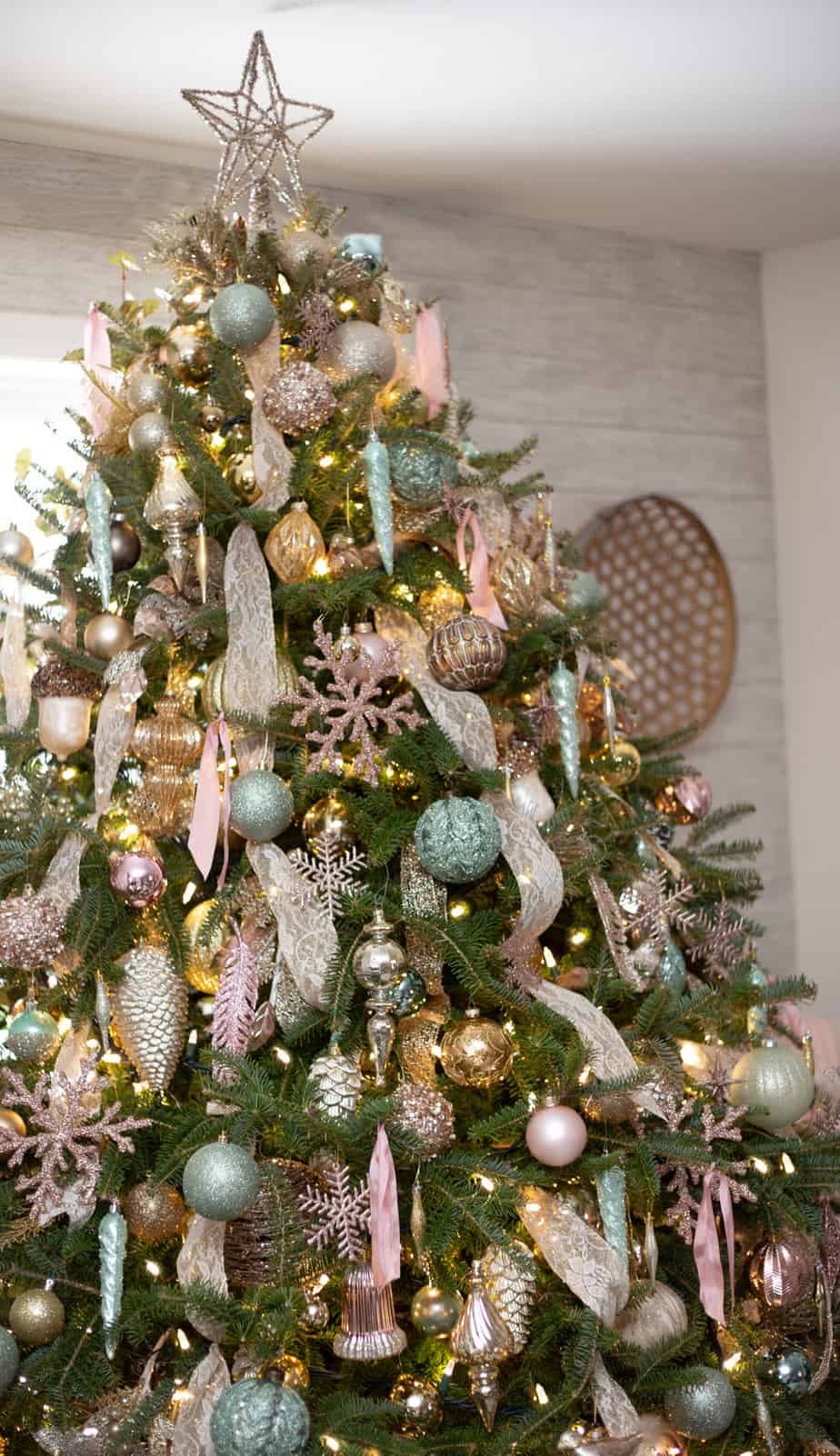
Decorating a real Christmas tree is quite similar to decorating an artificial one. I recommend starting with the topper. Depending on its base, it may take some adjusting to get it just right. I like to use a zip tie to secure the star, ensuring it stays in place. For more details, you can check out my step-by-step guide on decorating a tree, but generally, I follow this order:
- Topper
- Lights
- Ribbon or garland
- Decorative Picks
- Oversized Bulbs
- Filler ornaments
- Accent colour ornaments
- Special or sentimental ornament
The only other advice I can offer is that, unlike an artificial tree, the branches of a real tree can’t be adjusted. It’s a good idea to test the strength of a branch before hanging a heavy ornament. As the tree dries out, the branches will naturally begin to droop, so securing your ornaments from the start is the best way to keep them in place.

Disposing Of Your Tree After The Holidays
Ask around locally if you want eco-friendly ways to dispose of your tree. In many urban areas, trees are left at the curb for pick-up and recycled into mulch. You might also need to take your tree to a recycling center where it can be chipped.
Here are some other environmentally friendly disposal options to consider:
NOTE: If your tree was shipped in, it’s best to destroy it before spring to avoid introducing any pests.
- Goat farms value donated Christmas trees, as goats enjoy munching on the sappy bark and even the prickly pine needles. They will grub the entire tree.
- If it’s appropriate for your area, you could use trees to help stabilize stream banks and shorelines or use them as insulation around a drafty foundation.
- Leaving your tree in the backyard can create a habitat for birds and small animals.
- Smaller trees and wreath greenery can be put into your regular compost bin after all decorations and rings have been removed.
FAQ
How Much Water To Give A Christmas Tree?
The amount of water your tree needs will depend on its size—generally about one liter (or quart) of water for every inch of stem diameter. Begin by watering daily, then reduce the frequency as the tree starts to absorb less. You can check the water level by sticking your finger in the stand to ensure it hasn’t run dry.
How to Keep Your Christmas Tree Alive Longer?
Following the suggestions above will help extend the life of your Christmas tree. Keeping it well-watered after making a fresh cut and avoiding direct heat sources are your best strategies for maintaining its freshness.
What Is A Real Christmas Tree Called?
A real Christmas tree is typically called a “fresh-cut” or “live” Christmas tree. These are trees that are harvested specifically for use as Christmas trees and are typically sold at cut farms or tree lots. As far as variety names go, many coniferous trees are used for the holidays. Some of the most common are Douglas fir, Fraser firs, balsam fir, and blue spruce. Read this post by The Pioneer Woman for the best varieties.
How Long Can a Real Christmas Tree Last?
Many factors influence how long a tree can last indoors, but generally, one month is a good estimate. I typically cut mine the last weekend in November and keep it up (in my wood-fired home) until the first weekend in January. In a cold outdoor climate, however, a cut tree could last an entire season—four months or more!
How Much is a Real Christmas Tree?
The cost of a real Christmas tree varies based on the type, size, and location. On average, a real Christmas tree can range from $20 to $150, depending on these factors.
Is it better for the environment to buy a real Christmas tree or a fake one?
The debate over the environmental impact of real versus fake Christmas trees is pretty interesting. Some studies suggest that real trees are usually better for the environment, especially if they’re grown nearby and recycled after the holidays. On the flip side, artificial trees tend to have a bigger carbon footprint because of how they’re made and the materials used. But if you reuse an artificial tree for several years, that can help lessen its impact. In the end, the best choice depends on factors like local tree farming, recycling options, and how long you plan to use an artificial tree.
Is it OK to buy a real Christmas tree?
Yes, it is absolutely okay to buy a real Christmas tree. Real Christmas trees are a wonderful holiday tradition for many families. The scent of a real tree and the delightful natural ambiance make the most idyllic Christmas Scene. They are also a renewable and sustainable choice when sourced responsibly and recycled after use.
